People ask, often frustratingly, “how can I stop my thoughts?” and “how do I sit still for so long without feeling restless or achy?”. Certainly valid questions, and yes both of these are essential skills if you wish to learn meditation and reap its numerous benefits.
Like most things in life, you should start gently and in earnest; try out different meditation techniques and find one that works best for you, and why not sit in a chair if the lotus pose is too uncomfortable? Go easy. Remember, Rome wasn’t built in a day. It takes time, effort and patience to acquire a new skill.
You might find it interesting (and perhaps reassuring) that sitting still for long and controlling the constant chatter of the mind is an ongoing struggle for most people, even experienced meditators. But with consistent and patient practice, you should start getting the hang of it, and start harnessing the ray of benefits which include: stress and anxiety relief, improvements in heart conditions and blood pressure, getting better sleep, developing a higher level of self-awareness which in turn helps with your personal relationships; and having a sense of overall well-being.
As a meditation teacher who has taught the discipline as a stand-alone class and also as part of regular yoga asana classes over the years, I have looked into different techniques that could help control and calm the mind; and at the same time, offer unique and profound life experiences.
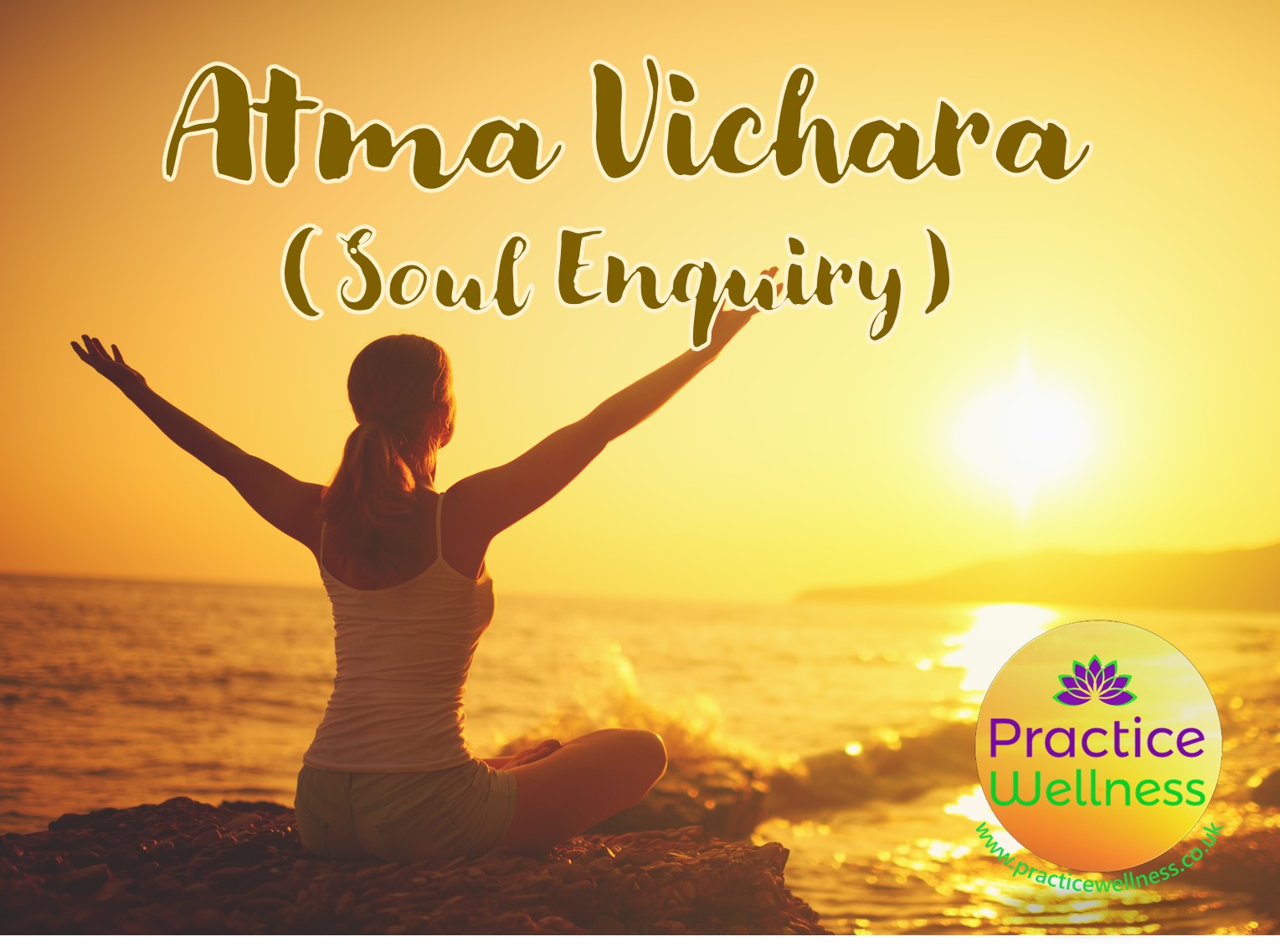
One of the most impactful techniques, and definitely one of my favourites, is an ancient yogic practice called Atma Vichara. The Sanskrit word Atma means Self or Soul, and Vichara means thought, deliberation, enquiry or analysis. As the name indicates, this practice involves enquiry into the Self which is very much in line with the aims of The Eight Limbs of Yoga*. It is based on the premise that the individual self is not distinct, but is the universal, unchanging Self (Atman), resulting in the cessation of ego and the attainment of bliss. (Learn more about this in my yoga philosophy course – link is below.)
Additional benefits of Atma Vichara are relaxation, enhanced experience of life, greater openness to change and improved creativity.
I am happy to report that Atma Vichara is now part of our Chakra Balancing Yoga Course** as it is perfectly aligned with the purpose of Crown chakra activation and balancing. As you may know, the crown chakra, or Sahasrara in Sanskrit, represents our spiritual connection to our higher selves and the Divine or the Universe. By practicing Atma Vichara, we improve our understanding of the Self which ultimately helps to dispel the illusion of being a separate, limited individual, but part of the Universal Consciousness.
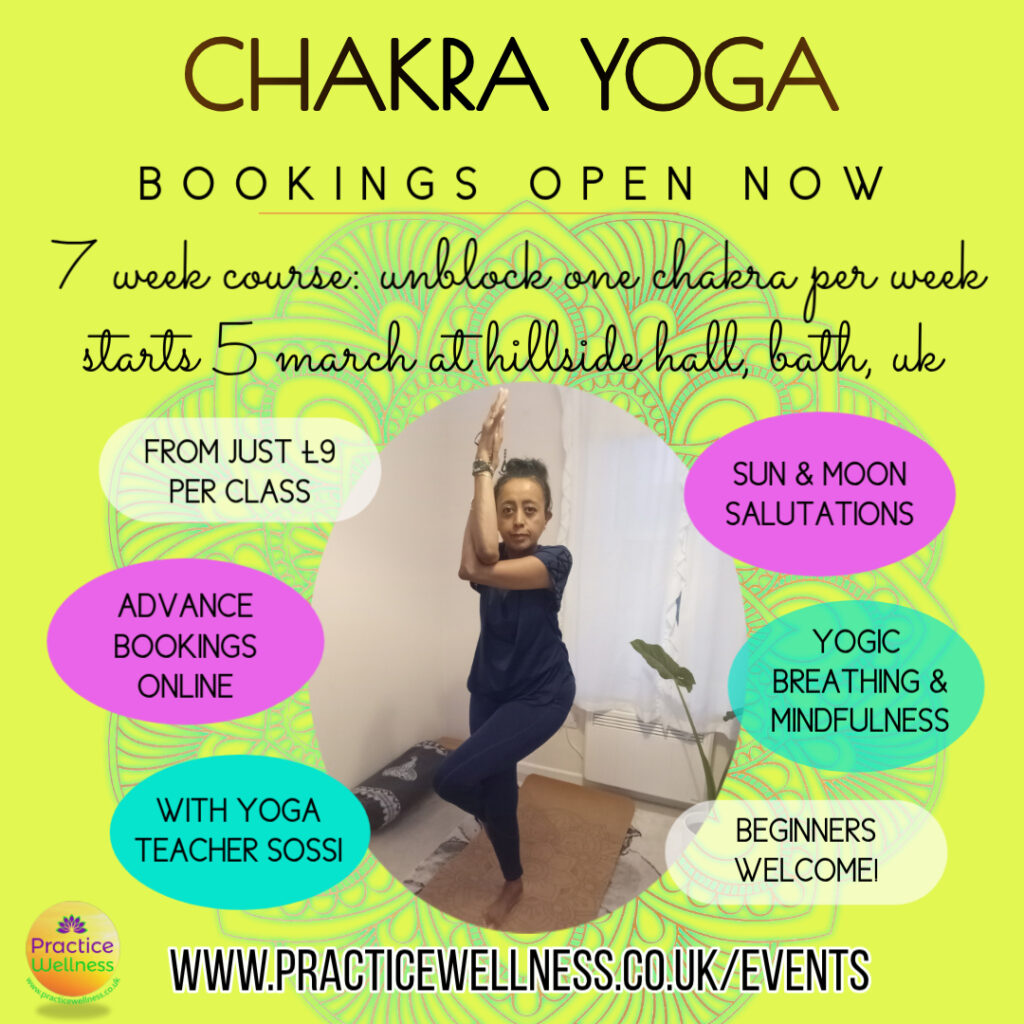
Join likeminded people at our next Chakra Yoga course starting Thursday 5th of March; and learn how to practice Atma Vichara on 16th of April. Hint: don’t miss the last class! 😉
Find all relevant links below.
* Short online course on The Eight Limbs of Yoga with free introductory video presentation
** Chakra Balancing Yoga Flow Course 5 March – 16 April
What is mindfulness meditation?
Book a private meditation class (online or in Bath, UK)
Other blogs on mindfulness meditation:
Loving Kindness Meditation (LKM)
The Raisin Exercise for Mindfulness
I hope that at least some this is helpful to you. If you have any questions, please contact me via email or my website (click here).
Namaste,
Sossi