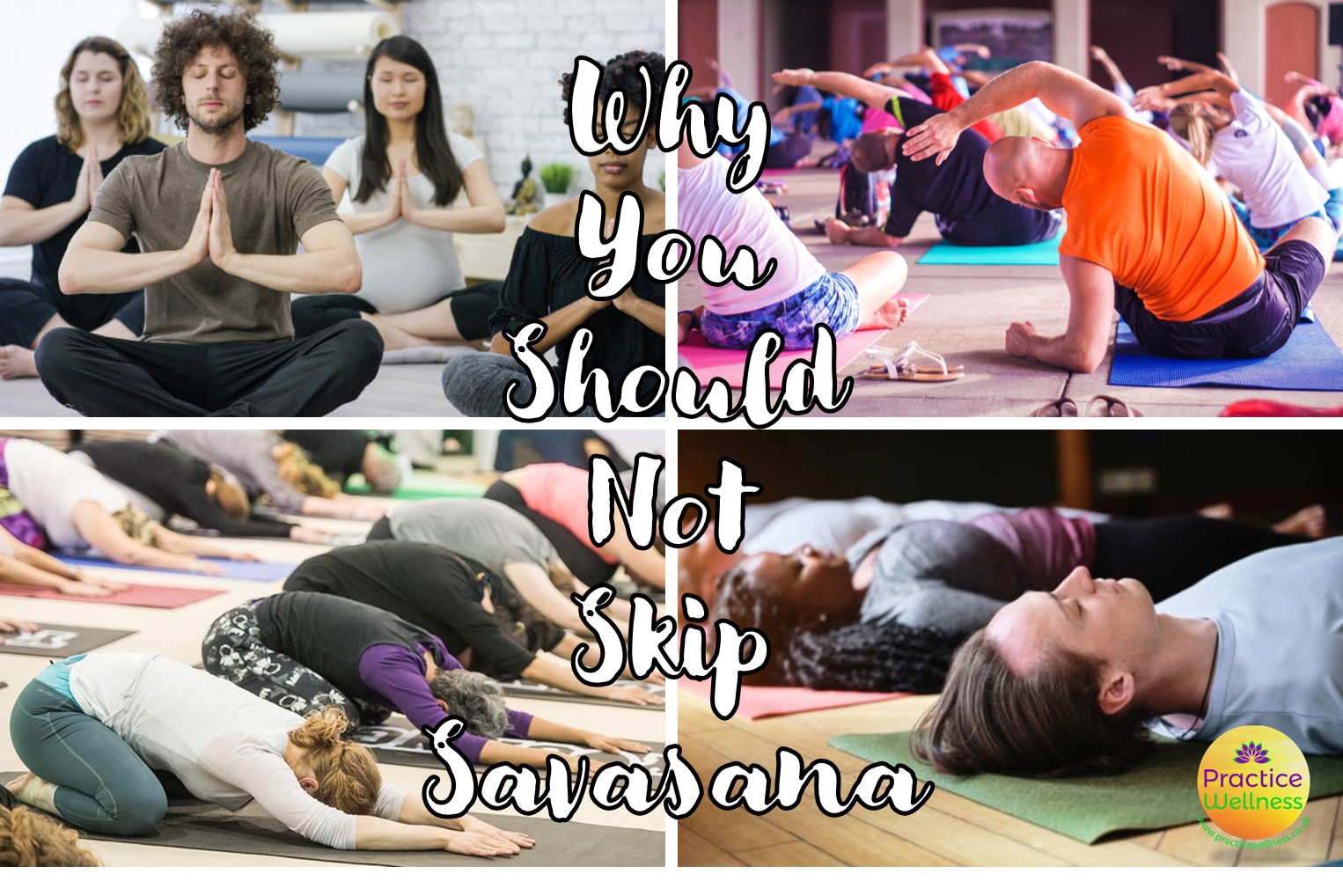
Savasana is a Sanskrit word pronounced shuh-VAH-suh-nuh. ‘Sava’ means corpse and ‘asana’ means seat or posture. However, ‘Corpse Pose’ probably doesn’t have the same ring as Savasana!
There are multiple legitimate reasons why it’s called the corpse pose; and none of them have to do with the physical mortality the words imply. In this blog, I define and explain Savasana, discuss its benefits, and offer a step-by-step guide on how to best practice it at home (or at a yoga class).
What is Savasana?
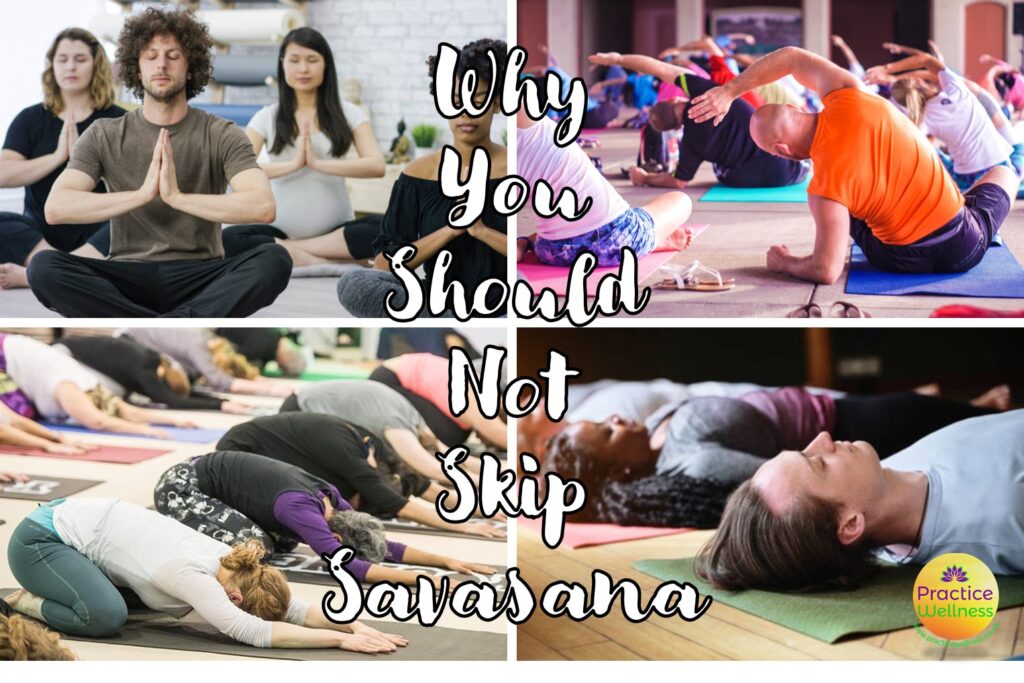
Savasana is the final resting pose after a yoga session, where we lie on our backs, with the arms and legs comfortably stretched out and the whole body completely relaxed from head to toe. Savasana is the only asana included in every sequence which signifies its importance in yoga, due to the numerous benefits it provides.
For some people, Savasana may seem an easy pose which offers no physical challenge, and is therefore not worth their time. They may even decide to pack up and leave before class is over to do “more important things” (yes, I see them sneaking out). For others it’s one of the hardest poses, because they are suddenly aware of the busy mind, sometimes called the ‘monkey mind’, where non-stop thinking, worrying and planning happens. They find themselves wide awake, staring at the ceiling, possibly fidgeting and waiting for it to be over.
In today’s fast-paced world, where many people are constantly on the go and rarely take time to slow down, Savasana is a perfect opportunity to experience deep relaxation. A great amount of healing takes place during this time. It is said that people who “have no time for relaxation” are probably the ones that need it the most – and it may be very true!
With patient practice, the ‘monkey mind’ will gradually calm down allowing us to reap all the benefits of Savasana.
Top six benefits of Savasana
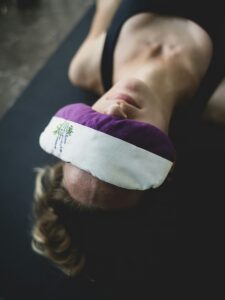
1. As we enter a state of deep relaxation, we activate the parasympathetic nervous system, which is one of the two main divisions of the autonomic nervous system responsible for ‘rest and digest’ function. (The other being sympathetic nervous system responsible for ‘fight or flight’ function.) As we consciously release tension from each part of the body, heart rate lowers, blood pressure decreases and immune system strengthens. The body returns to a state of natural healthy balance, where healing is promoted and inflammation is reduced.
2. Savasana is an act of self-care. It is a time for us to prioritise our own wellbeing and take care of ourselves; it’s a ‘me time’.
3. The asana is done at the end of a class so that we can absorb and integrate the gains and wisdom of our yoga practice through deep relaxation.
4. Through Savasana, we experience the 5th limb of ‘The Eight Limbs of Yoga’*, Pratyahara, which is about withdrawing the senses from the stimulation of the outside world and turn them inward. (Learn more about the Eight Limbs in my short online course. Follow the link below.)
5. As we rest the whole body and focus on the breath, we enter a meditative state where we observe thoughts and sensations without judgment. This will lead towards a greater self-awareness and insight. In the Eight Limbs of Yoga, meditation is the 7th limb.
6. Savasana is glimpse into the peace that can be experienced when we shed the ego. There is a good reason it is also referred to as ‘mrtasana’ or ‘death pose’ (in addition to ‘corpse pose’). By surrendering the mind to non-action, we witness the death of all craving and grasping toward anything outside of us for happiness. This is in alignment with Asteya (non-stealing) and Aparigraha (non-hoarding), of the Eight Limbs, which teach us that we are already enough and whole. Everything is perfect exactly as it is. There’s nothing left to do.
How to get the most out of Savasana
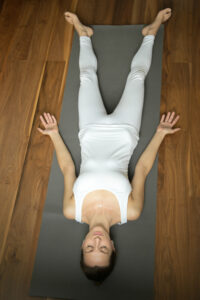
 Set a timer for 10 or 15 minutes.
Lie down on your back on your yoga mat, with legs stretched out and feet at either end of the mat. Allow your feet to fall sideways – let go of any control. Rest your arms by the side of the body with palms facing up. Gently tuck the chin in to elongate the spine.
If you have a bolster cushion, place it under your knees to support the back. This may be especially useful for people with back issues. You could also use an eye pillow to help relax the muscles around the eyes.
Begin by consciously releasing tension from each part of your body starting from the head. Use your breath to let go of tension from the skull, face, neck, shoulders, arms, hands, chest, abdomen, back, hips, legs and feet. Feel your body slowly sinking into the mat with every exhale.
Stay focussed on your breath and try to slow it down. You could do this consciously at first, by filling the lungs to their full capacity, and exhaling slowly and completely. Eventually, let go of all conscious efforts and drop into the stillness inside of yourself. If the mind wanders off, gently bring it back to the present moment by watching your breath and the sensations in your body without judgement.
When your timer goes off, wriggle your fingers and toes. Stretch your arms above the head and your feet away from the body. Then gently hug your knees to release any back tension, roll to one side and rest in the fetal position for a moment – reflecting on rebirth. It is recommended to rest on your right after a vinyasa flow and on your left after yin yoga to activate the relevant (opposite) autonomous nervous system, i.e. parasympathetic after fast yoga and sympathetic after slow yoga.
When you are ready, slowly lift up, using your right or left hand to push the mat away, and sit in a comfortable position. It is important to come up from your side to protect the spine.
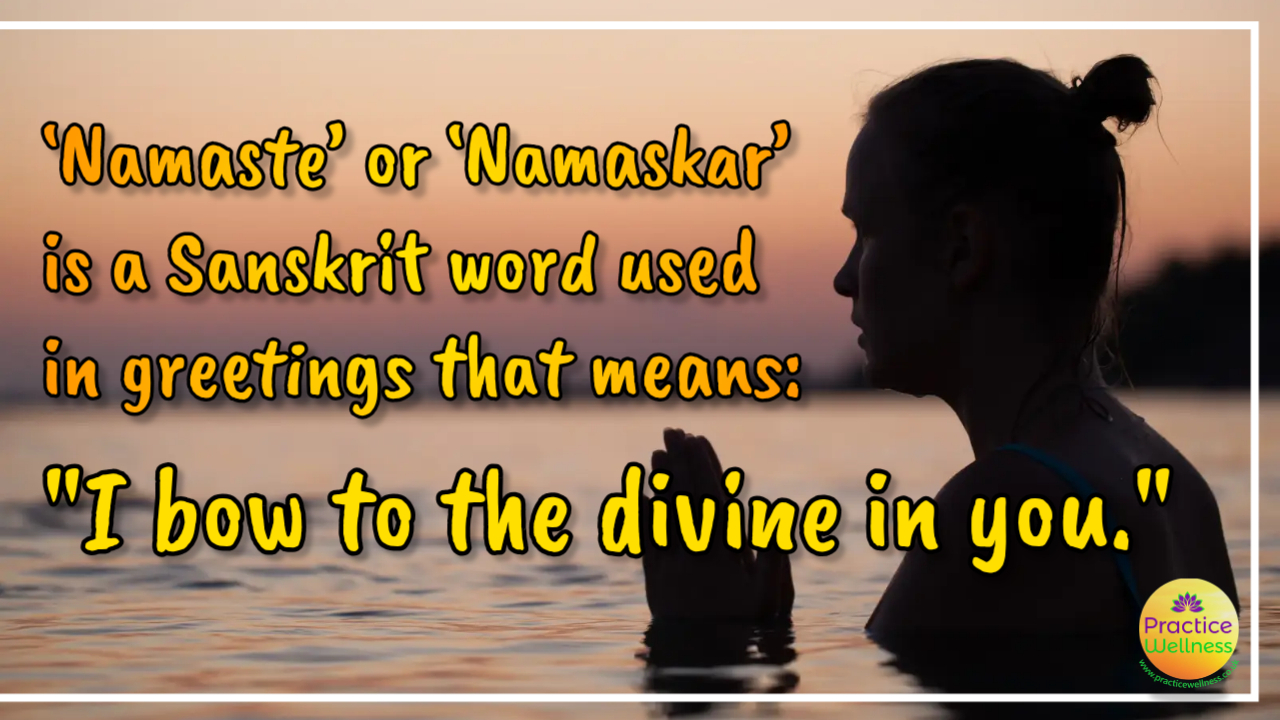
Take a few moments, with your eyes still closed or softly gazing, to reflect on your Savasana, and yoga experience, and to observe any changes in your body and mind. You might wish to bring the palms together at the heart centre in Anjali mudra, and say “namaste” to recognise the divine light in all creation.
In summary
It is fair to conclude that there is so much more to Savasana, than simply lying on the back and relaxing. If you had previously thought it was an easy or unessential yoga pose that you could skip, maybe you would now start questioning that thought and be open to trying it out at home with my step-by-step guide above, or at a yoga class near you!
By the way, I offer a full guided Savasana at all of my classes (exactly as described in this blog). If you’ve never been to my classes, you are more than welcome to come along. You will find my weekly classes timetable linked below.**
If you normally enjoy Savasana, or enjoyed reading this blog, you may be interested to learn about Yoga Nidra or yogic sleep which is a state of consciousness between waking and sleeping, typically induced by a guided meditation. Yoga Nidra should always be delivered by fully qualified practitioners. You can find out more on the internet, or follow the link below to Yogapedia.***
And finally…
Do you have any fascinating Savasana stories to tell? Any particular challenges that you’ve come across not mentioned in this blog or maybe some unusual experiences you may have had during your practice? I’d love to hear from you on any of these, or with any general comments on this blog. You can simply reply from your mailbox or email me from my website.
Email me your stories, questions or comments
Below are the rest of links mentioned in this blog:
* Short online course on the Eight Limbs of Yoga
Vinyasa Flow Tuesdays at Hedley Hall (6.15pm)
Chakra Balancing Yoga Flow Thursdays at Hillside Hall (6pm)
*** Learn about on Yoga Nidra on Yogapedia
Namaste,
Sossi